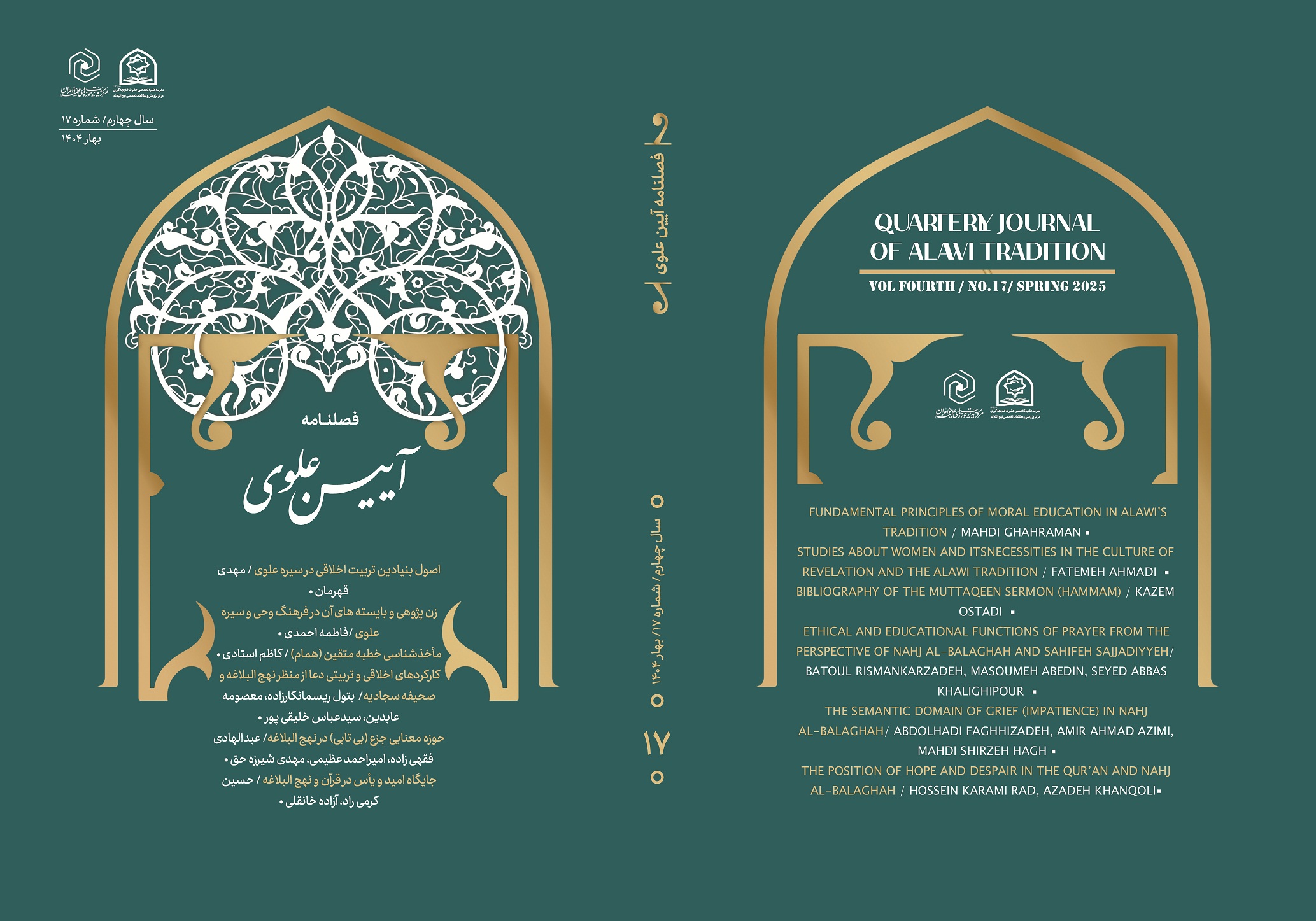
فصلنامه آیین علوی

فصلنامه آیین علوی

حوزه‌ معنایی جزع (بی‌تابی) در نهج‌البلاغه

نوع مقاله : مقاله پژوهشی

نویسندگان
1 . استاد گروه علوم قرآن و حدیث دانشگاه پیام نور تهران
2 دانشجوی دکتری رشته علوم و معارف نهج البلاغه، دانشگاه پیام نور تهران.
3 دانشجوی دکتری رشته علوم و معارف نهج‌البلاغه، دانشگاه پیام نور تهران
10.22034/aeena.2025.1999.1024
چکیده
جزع و بی‌تابی یکی از مهم‌ترین عوامل تهدیدکننده سلامت روان است که از دیرباز تا‌کنون مورد مطالعه پژوهشگران قرار گرفته است. این واکنش احساسی که اغلب در مواجهه با مصائب و چالش‌های طاقت‌فرسای زندگی بروز می‌کند، گاهی به عنوان نشانه‌ای‌ از ضعف ایمان، نپذیرش مشیت الهی و ناتوانی در برابر سختی‌ها تلقی می‌شود. از این‌رو، شناخت مفهوم جزع و پیامدهای آن برای ارتقای سلامت روان و بهبود کیفیت زندگی امری ضروری است. پژوهش حاضر سعی دارد به روش توصیفی- تحلیلی و با بهره‌گیری از رویکرد معناشناسی به بررسی حوزه‌ معنایی واژه جزع در نهج‌البلاغه بپردازد. نتایج پژوهش حاکی از آن است که امام علی (ع) ضمن تأکید بر صبر و شکیبایی، به مفهوم جزع و بی‌تابی نیز توجه ویژه‌ای داشته و آن را به دو گونه ممدوح و مذموم تقسیم کرده است. واژه «جزع» و مشتقاتش در نهج‌البلاغه به معانی متنوعی چون ناله و زاری، ترس، بردباری و بی‌تابی به‌کار رفته که بیشترین کاربرد آن به معنای بی‌تابی است. همچنین، این واژه در محور جانشینی با واژه‌هایی چون «وَهِل، عَلَز و ضیق»، در محور تقابل معنایی با «صبر، أحتمال، حِلم، جَلَّدَ، تَأسّی، تَعَزی و أناة» و در محور هم‌نشینی با ترکیب‌هایی مرتبط با مفهوم جزع ارتباط معنایی دارد. بدیین ترتیب
کلیدواژه‌ها
موضوعات

عنوان مقاله English

The semantic domain of the participle (despair) in Nahjul-Balagha

نویسندگان English

Abdul Hadi Fiqhizadeh 1
amirahmad azimi 2
Mehdi Shirze Haq 3
1 Professor of the Department of Quran and Hadith Sciences, Payam Noor University, Tehran
2 PhD student in Nahjul-Balagha Sciences and Education, Payam Noor University, Tehran.
3 PhD student in Nahj al-Balagha Sciences and Education, Payam Noor University, Tehran
چکیده English

Translation:


Grief and restlessness are among the most significant factors threatening mental health, and they have long been studied by researchers. This emotional reaction, which often arises in the face of life’s hardships and exhausting challenges, is sometimes regarded as a sign of weak faith, rejection of divine will, and inability to endure difficulties. Therefore, understanding the concept of jaz‘ (grief/restlessness) and its consequences is essential for promoting mental health and improving quality of life.


The present study, using a descriptive-analytical method and a semantic approach, seeks to examine the semantic domain of the word jaz‘ in Nahj al-Balāgha. The findings indicate that Imam Ali (peace be upon him), while emphasizing patience and perseverance, also paid special attention to the concept of jaz‘ and divided it into two types: commendable and blameworthy. The word jaz‘ and its derivatives in Nahj al-Balāgha are used with diverse meanings such as lamentation and wailing, fear, endurance, and restlessness, with its most frequent usage being in the sense of restlessness. Moreover, this word appears in the axis of substitution with words such as wahil, ‘alaz, and dayq, and in the axis of semantic opposition with words such as ṣabr (patience) and iḥtimāl (forbearance). then

کلیدواژه‌ها English

Semantics
Semantic domain
Jaz&lsquo؛
Restlessness
Nahj al-Balāgha