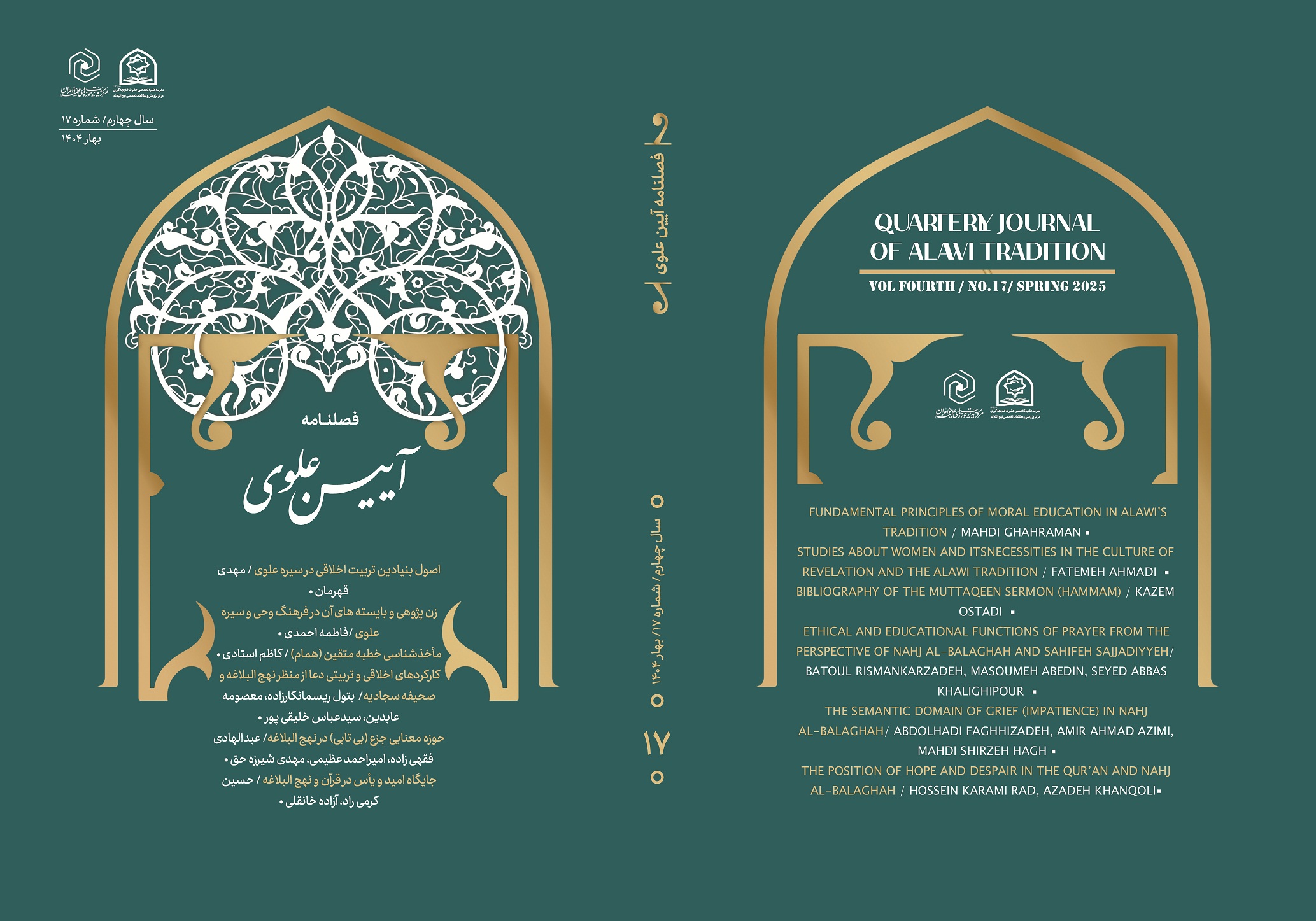
نوع مقاله : مقاله پژوهشی
عنوان مقاله English
نویسندگان English
In Islamic culture, supplication and seeking God's help are introduced as the highest form of worship and the highest level of the servant's relationship with God. Setting the role model of divine prophets, imams, and true leaders in this regard brings many positive results in human life. The supplications and words of Amir al-Mu'minin Ali (AS) in Nahj al-Balagha and the supplications of Imam Sajjad (AS) in Sahifa al-Sajjadiyah are considered very suitable examples for achieving this goal. The present library research was conducted in order to examine the moral and educational functions of supplication from the perspective of the teachings of Nahj al-Balagha and Sahifa al-Sajjadiyah using a descriptive and analytical method. The results of the study show that prayer has important moral and educational effects, the most prominent of which are self-knowledge, deterrence from sin, abstinence from sensual matters and desires, gaining courage and success in work, praising and glorifying God, encouraging efforts to achieve transcendent goals, confession in the presence of God, and in a word, guiding man. Prayer is the best key to unlocking the problems of human life, and turning to spirituality can cure all human mental illnesses. This text has been translated and used
کلیدواژهها English