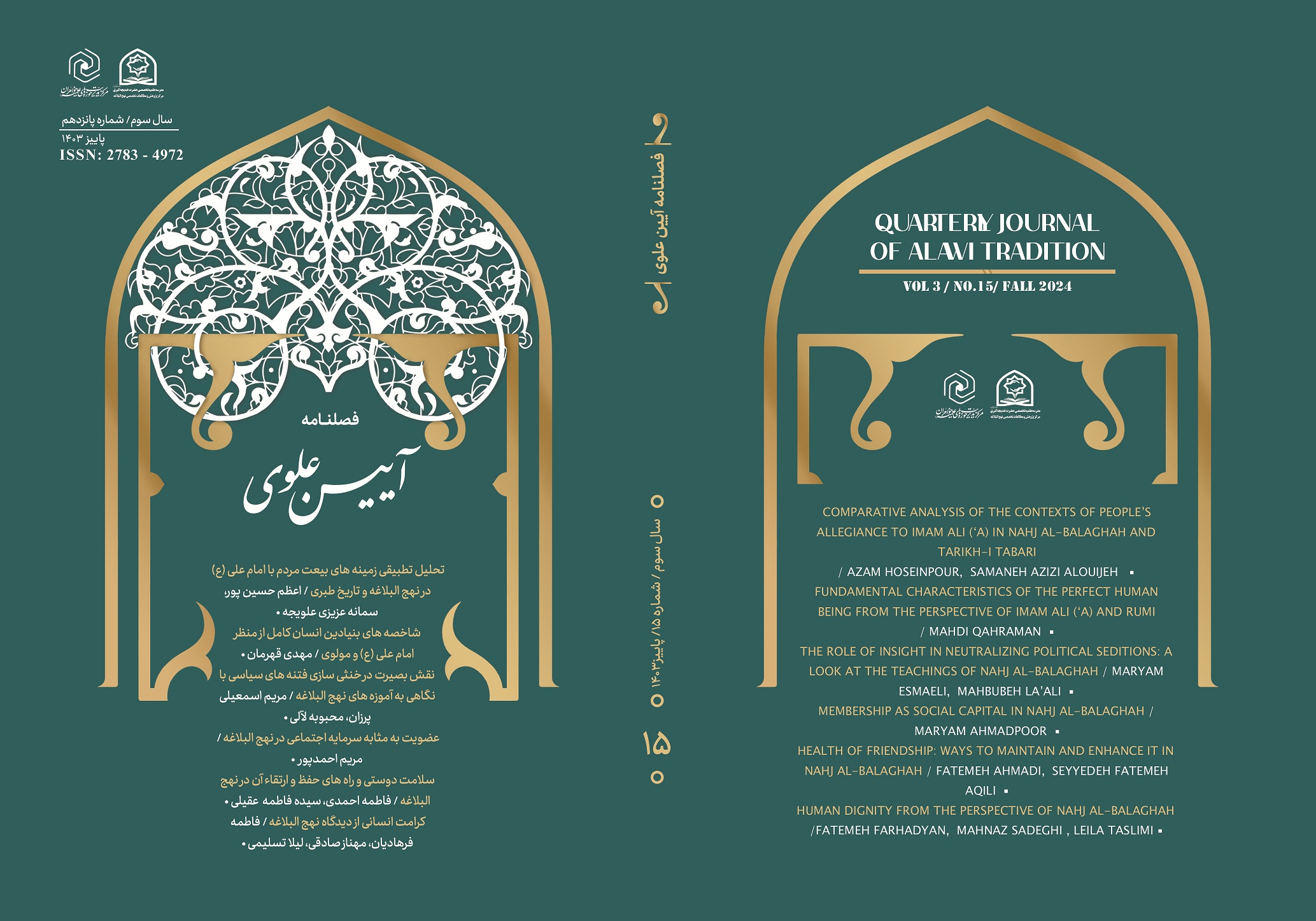
فصلنامه آیین علوی

فصلنامه آیین علوی

تحلیل تطبیقی زمینه های بیعت مردم با امام علی ع در نهج البلاغه و تاریخ طبری

نوع مقاله : مقاله پژوهشی

10.22034/aeena.2024.778
چکیده
پس از قتل عثمان بن عفان، بیعت مردم با امام علی ع به عنوان کلیدی‌ترین عامل انتقال قدرت و آغاز دوره‌ای جدید در تاریخ اسلام شناخته می‌شود. این بیعت نه تنها به تغییر رهبری اسلامی منجر شد، بلکه موجب بروز فتنه‌ها و تنش‌های اجتماعی میان مسلمانان گردید. دو منبع معتبر در این زمینه، تاریخ طبری و نهج ­البلاغه هستند که به تحلیل ابعاد مختلف این واقعه پرداخته‌اند. تاریخ طبری به عنوان یک منبع اساسی در تاریخ‌نگاری اسلامی، تأثیر عمیقی بر روایت‌های تاریخی و پژوهش‌های آتی در این حوزه داشته است. این تحقیق به بررسی تشابهات و تفاوت‌های این دو متن در زمینه بیعت با امام علی ع می‌پردازد. هر دو منبع بر اهمیت بیعت و تأثیر فشارهای اجتماعی و سیاسی در زمان بیعت تأکید دارند. همچنین، نصیحت‌ها و حمایت­های امام علی ع از عثمان و تأثیر آن بر مشروعیت بیعت در هر دو متن مورد توجه قرار گرفته است. با این حال، تاریخ طبری به تفصیل به جزئیات وقایع و زمینه‌های اجتماعی بیعت پرداخته و اختلاف‌نظرها را تحلیل می‌کند. عبدالله بن سبا به عنوان شخصیتی بحث‌برانگیز در تحریک مردم برای بیعت و عامل بروز تنش‌ها و اختلافات داخلی معرفی شده و نقش مصریان در شکل‌گیری شورش‌ها نیز به وضوح در تاریخ طبری برجسته شده است، در حالی که وقایع در نهج ­البلاغه به شیوه‌ای متفاوت تحلیل شده است.
کلیدواژه‌ها

عنوان مقاله English

Comparative Analysis of the Contexts of People’s Allegiance to Imam Ali (‘a) in Nahj al-Balaghah and Tarikh-i Tabari

چکیده English

After the assassination of Uthman Ibn Affan, the people’s allegiance to Imam Ali (‘a) is recognized as the most crucial factor in the transfer of power and the beginning of a new era in Islamic history. This allegiance not only led to a change in Islamic leadership but also caused seditions and social tensions among Muslims. Two reliable sources in this regard are Tarikh-i Tabari and Nahj al-Balaghah, which have analyzed the various aspects of this event. Tarikh-i Tabari, as a fundamental source in Islamic historiography, has had a profound impact on historical narratives and future research in this field. This study examines the similarities and differences between these two texts about the pledge of allegiance to Imam Ali (‘a). Both sources emphasize the importance of allegiance and the influence of social and political pressures at the time of the allegiance. Also, Imam Ali’s (‘a) advice and support for Uthman and its impact on the legitimacy of the allegiance are considered in both texts. However, Tarikh-i Tabari elaborates on the details of the events and the social context of the allegiance and analyzes the disagreements. ‘Abdullah Ibn Saba is introduced as a controversial figure in inciting people to allegiance and a factor in the emergence of internal tensions and disputes. The role of the Egyptians in the formation of the uprisings is also clearly highlighted in Tarikh-i Tabari, while events are analyzed differently in Nahj al-Balaghah

کلیدواژه‌ها English

: Imam Ali (‘a)
assassination of Uthman
Tarikh-i Tabari
Nahj al-Balaghah
allegiance
sedition
‘Abdullah Ibn Saba